The Shopkeeper's Advantage: Why Local Credibility Still Beats the Algorithm
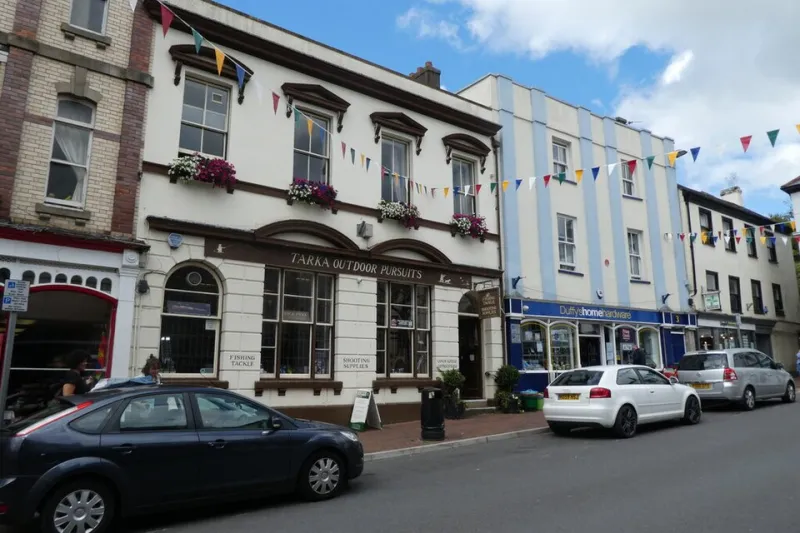
Photo: Roger Cornfoot , CC BY-SA 2.0, via Wikimedia Commons
There's a hardware shop near me that has outlived two out-of-town retail parks. It doesn't have a funnel, a content calendar, or a growth hacker. What it has is a man called Keith who remembers that you bought a particular size of screw in March, and tells you, gently, that you've bought the wrong one again.
I think about that shop a lot when I'm talking to professional services firms about growth. Because most of us in consultancy, accountancy, law, surveying, architecture and the rest have spent a decade being told that growth is a digital problem - that the answer is more content, more ads, better funnels, sharper lead magnets. And meanwhile the high street has been running a different playbook, quite profitably, for about three hundred years.
This is an argument, not a lecture. But I think local credibility is still the most underpriced growth asset in British professional services, and 2026 is a good year to say so out loud.
Repeat custom is a business model, not a happy accident
The greengrocer doesn't try to win every customer in town. They try to win the same customer four times a month. That changes everything about how they behave - they can afford to be generous, they can afford to remember small things, because the relationship has a long tail.
Most small firms are structurally the same, and behave as though they aren't. A client who comes back for a second piece of work costs a fraction of what a new one costs to win. Yet the marketing budget, and the emotional energy, all goes into acquisition.
A simple 2026 test: count how many of last year's clients came back unprompted. If it's fewer than you'd like, the problem probably isn't your website.
Referrals arrive with a name attached
The high street runs on introductions. 'Try the butcher on the corner, tell him I sent you.' The referral carries a person, a reason and a small social obligation.
Professional firms chase referrals too, but often in the vaguest possible terms - a line in a newsletter, a hoped-for mention at a networking breakfast. The high street version is more specific. It names the person, the problem and the shop.
So make it easy. Tell your best clients exactly what a good introduction looks like: who you help, what the first conversation costs, and what you'll do within a day of hearing from them. Vagueness is the enemy here, not reluctance.
Visible expertise beats invisible polish
The fishmonger demonstrates. He doesn't publish a thought-leadership piece on supply chains; he stands there, knife in hand, showing you how to fillet a mackerel. You leave believing him.
Professional services have a tendency to hide expertise behind polish - the polished website, the polished bio, the polished case study with every number rounded into meaninglessness. Polish is not the same as evidence.
There's a version of this that costs nothing: a short, plain written answer to a question clients actually ask. Not 'Five Trends Shaping 2026'. More like 'What happens if you miss the filing deadline'. The second gets forwarded. The first gets scrolled past.
Showing up is underrated
Independent shops are physically present in a way no digital channel can replicate. They sponsor the under-elevens football kit. They put a notice in the parish magazine. They turn up to the Christmas lights switch-on in the rain.
I'm not suggesting you buy a football kit, though it's not the worst idea. I am suggesting that a partner at a small firm who is genuinely visible locally - at the chamber of commerce, at the cricket club, at the school governors' meeting - has a marketing channel that costs time rather than money and compounds quietly.
The mistake is treating this as a chore. Done well, it's the most enjoyable part of the job. It's also where most of the work comes from.
Why this matters more in 2026 than it did in 2019
Three reasons, quickly.
First, trust in digital content is thinning. Clients increasingly assume a webpage might have been written by a machine, and they're often right. A person they've met, in a place they know, is a different category of reassurance.
Second, paid acquisition has become expensive and jittery. For a five-partner firm, outbidding national brands on search terms is a poor use of a marketing budget.
Third, and most practically, local search has quietly become the front door. Someone looking for a surveyor in a specific town is mostly looking at a map, a review count and three phone numbers. That's a high-street-shaped problem, and it rewards the firm that behaves like a good shop.
A 2026 action plan for small firms
Nothing here needs a new hire or a large budget.
Claim and finish your local listings. Google Business Profile, Bing Places, the local directory your council still runs. Correct opening hours, a real photo of the building, a phone number a human answers. Most firms have done half of this and left it dusty.
Ask for reviews in person, at the moment of thanks. Not by automated email three weeks later. Ask at the point the client says 'that was easier than I expected', and send them the link on the spot.
Pick two local commitments and stay for three years. A chamber group, a business network, a charity trusteeship, a sports club. Depth beats breadth. Everyone can spot the person who joined, attended twice and vanished.
Publish one genuinely useful thing a month, in plain English. Answer a real question. Sign it. Put your town in the title.
Build a referral script. Three sentences you can say out loud without cringing, that tell a client exactly who you'd like to meet and why.
Check that your next-door neighbour knows what you do. This sounds absurd until you test it. Half the firms I ask cannot tell me what the business two doors down actually does. Start there.
The honest caveat
Local isn't a fence. A firm in Shrewsbury can win work in Sheffield, and plenty do. The argument isn't that you should only serve your postcode.
The argument is that local credibility is a foundation, and foundations are what let you build outward without wobbling. Keith's hardware shop would be lost in a national price war. It is completely unassailable on its own street.
Most small professional firms don't need to be everywhere. They need to be the obvious choice in a place, for a type of problem, to a group of people who talk to each other. That's not nostalgia. It's a growth strategy, and it's been sitting on the high street the whole time.